Guides/Article
Artwork Captions for Auction Houses: Consistent Credits from Catalog to Bid Room
8 min read · Updated September 12, 2026
Auction houses move the same lot through many surfaces: printed catalog, website, preview wall, Instagram, press, and the screen in the bid room. When the artist name, title, date, or sale credit drifts between those channels, bidders notice — and trust dips.
This guide gives specialists and marketing teams one caption system that stays identical from catalog entry to hammer. For museum field order, see How to Write a Museum-Style Artwork Caption. For gallery wall and social consistency, see Exhibition Labels for Galleries: Consistent Captions Across Shows, Social, and Press.
One lot, many surfaces — one credit
Treat each lot’s caption as a single source of truth. Write it once in the cataloguing system, then reuse it everywhere with only length cuts — never new facts invented for social or the preview.
- Catalog / website: lot number + full tombstone + estimate and sale credit
- Preview wall / condition report images: same identifying block including lot number
- Social and press: same lot number, artist, title, date, medium — plus house credit
- Bid room screen: shortest faithful version of the same block (lot number first)
The auction house tombstone template
Keep field order fixed across the sale. Consistency makes a regional house read as carefully as a global one.
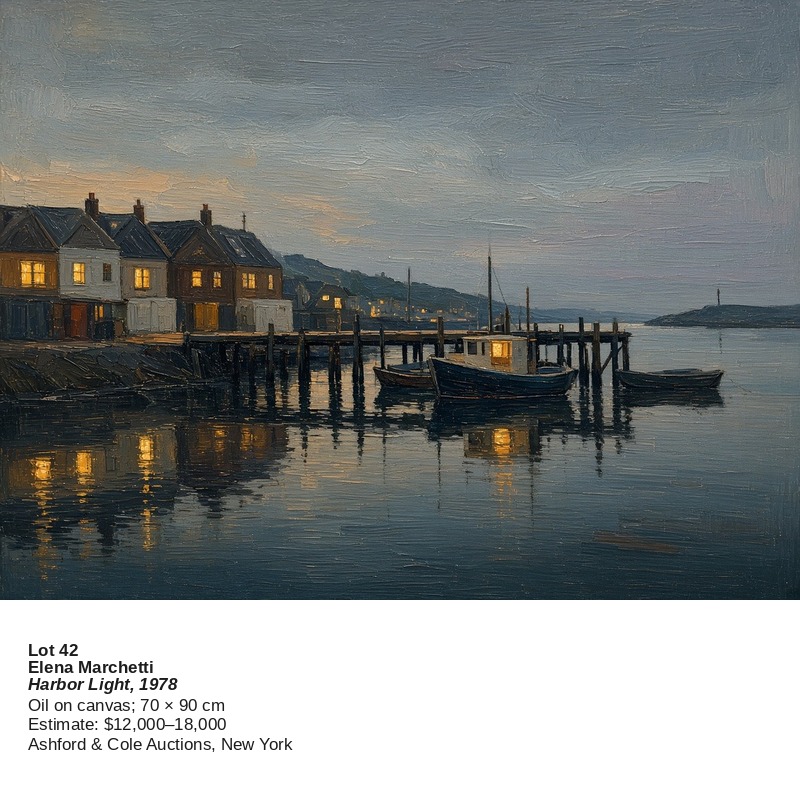
Lot 42
Artist Name (nationality, birth–death)
Title of the Work, Year
Medium; dimensions
Estimate: $12,000–18,000
Ashford & Cole Auctions, New York

Optional
Provenance / literature notes stay in the catalog body — not reinvented in Instagram captions
Credits auction teams should not skip
House credit and lot identity protect the sale. When photos circulate without them, the work becomes “seen online” instead of “offered by you.”
- [House Name] Auctions, [City]
- Lot number when the sale is live or previewing
- Estimate line when your house policy allows posting it
- Sold / After sale wording only after the hammer — never premature
A workflow that survives catalog week
Lock captions before images leave the specialist’s desk. Marketing should copy from the same rows the cataloguer approved — not rewrite from memory the night before a Stories post.
- Approve artist / title / date / medium with specialists before print
- Export one master list for catalog, web, social, and screens
- Caption lot photography before it goes to PR or Instagram
- Send press a folder of images that already include the credit under the work
Catalog vs bid room vs Instagram: same facts, different length
Do not invent a second title for the feed. Shorten provenance and essays; never change artist, title, year, or medium between channels.
Catalog entry
Lot 42
Elena Marchetti (Italian, 1932–2019)
Harbor Light, 1978
Oil on canvas; 70 × 90 cm
Estimate: $12,000–18,000
Ashford & Cole Auctions, New York

Social / press image
Lot 42
Elena Marchetti
Harbor Light, 1978
Oil on canvas; 70 × 90 cm
Ashford & Cole Auctions, New York

Bid room screen
Lot 42
Elena Marchetti
Harbor Light, 1978
Common auction caption failures
These mistakes show up most in post-sale audits:
- Beautiful lot photos with no house credit on the image
- Estimate in the Instagram text only — lost when screenshotted
- Title spelling that differs between catalog PDF and website
- Press receiving uncaptioned JPEGs and inventing their own credits
- Rewriting lot lines from memory minutes before a live post
Keep every sale channel consistent with ArtCaption
When you need the tombstone under the lot image — for preview docs, Instagram, or press — drop the photo into ArtCaption, fill the fields from your master list, and export a clean museum-style caption with your auction house credit. Processing stays private in the browser, with no upload to our servers.
FAQ
- How should auction houses format lot captions?
- Use a fixed tombstone order: lot number, artist, title, year, medium, dimensions, then estimate and house credit as policy allows. Keep that identifying order identical on catalog, web, social, and screens.
- Should Instagram lot posts match the printed catalog?
- Yes for the identifying facts. You can drop long provenance on social, but lot number, artist, title, date, medium, and house credit should match the catalog.
- What auction house credit line should appear under images?
- Lead with the lot number (for example, Lot 42), then “[House Name] Auctions, [City].” Add estimate only when your house policy permits publishing it on that channel.
- When should auction teams caption lot photography?
- Before images circulate. Caption lot photos before posting, press outreach, or preview handouts so credit cannot be separated from the image.
Related guides
- How to Title a Painting: Clear Artwork Names for Galleries, Sales, and Online Captions
- Free Museum/Exhibition Label Generator (No Design Skills Needed)
- How to Add a Caption Under an Artwork Photo (Without Photoshop)
- How to Write a Caption for a Painting (Artist, Title, Year, Medium)
- Artwork Caption Template: Copy-Paste Museum Labels for Paintings (Free Examples)
- Artwork Captions for Collectors: Catalog Your Collection Like a Museum
- Exhibition Labels for Galleries: Consistent Captions Across Shows, Social, and Press
- Artwork Captions for Emerging Artists: Look Professional Before the Gallery Does
- Why Every Artwork Photo Needs a Caption Online
- How to Write an Exhibition Wall Label
- Museum Artwork Caption Examples (Painting, Photo, Sculpture)
- How to Write a Museum-Style Artwork Caption
Create your caption next
Upload an artwork image and generate a clean museum-style caption in seconds — privately on your device.
Add a Caption